Assess
Clarify goals, history, current training, golf demands, movement options, recurring limitations, and the pressure patterns that show up when the score matters.
Organize the golfer first. Then build strength, speed, durability, and mental-performance skills that stay available under pressure.
Your golf professional owns the swing. Stillpoint develops the body, capacity, attention, and self-trust that help technical work transfer.
In person serving Greenwich & Fairfield County, CT · Virtual mental-performance coaching nationwide
Owns technique, ball flight, club delivery, and course-specific golf skill.
Assesses how the golfer breathes, organizes position, coordinates movement, produces force, prepares, and responds under pressure.
Eric does not diagnose or rewrite the golf swing. He builds the physical and mental conditions that help the golfer access the technical work they already own.
The starting point is not a generic exercise menu or another swing thought. It is a clear look at the golfer in front of us, followed by a progression their body and season can actually adapt to.
Clarify goals, history, current training, golf demands, movement options, recurring limitations, and the pressure patterns that show up when the score matters.
Use breathing, position, balance, and coordination so rotation and force have somewhere useful to go—and the golfer can feel what is happening.
Progress usable strength, mobility, speed, power, stamina, and durability at a dose the golfer can recover from and repeat.
Connect the work to practice and the course, review what changed, and keep swing decisions with the golfer’s golf professional.
One coach holds the mental and movement work together. Every rep becomes practice in sensing, organizing, trusting, and adapting—without a handoff between the two.
Eric organizes movement, training history, golf demands, and pressure patterns into priorities the golfer can act on. This training logic shows how observation becomes a clear sequence.
Nervous-system preparation.
Reconnect the athlete to the basic sensory information that guides movement.
Challenge the athlete in environments that reward error.
Increase the capacity to do everything well.
Rhythm + play that is sport-specific and transfers.
Prepare the system first. Add challenge and capacity next. Finish with rhythm, play, and transfer.
Eric helps golfers notice pressure, recognize the story collapsing their options, and learn how to return to clarity.
The golfer needs to read their state better than they read greens.
Use P.A.R.—Pressure, Accept, Return—as a brief, repeatable reset when urgency or fear takes over.
Build routines, self-trust, decision-making, confidence, and mistake recovery so the golfer can choose and commit.
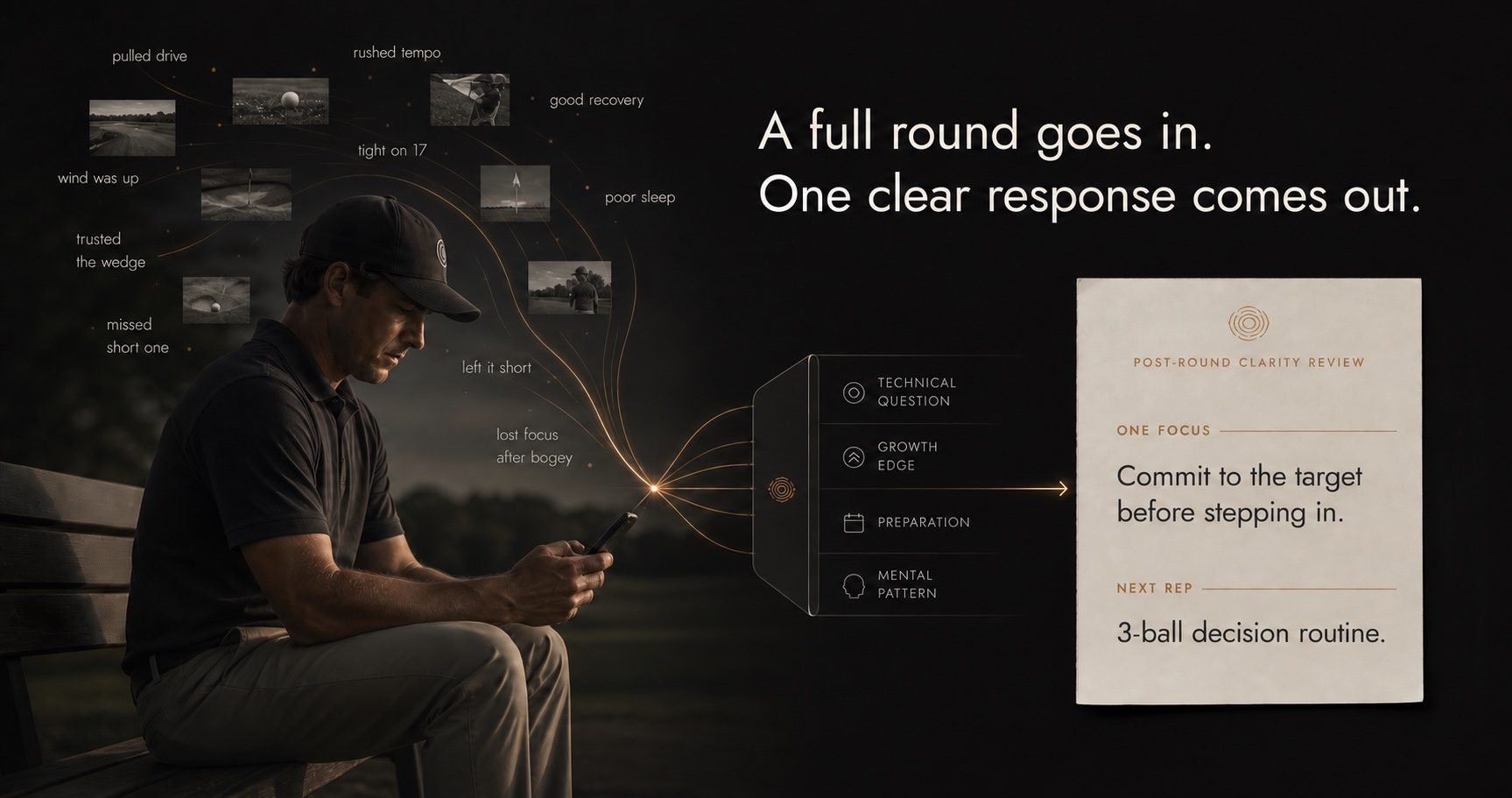
The Post-Round Clarity Review funnels mental noise into specific areas of focus. It helps golfers avoid creating the wrong meaning from a round or placing their attention on the wrong thing.
Shots, emotions, body state, decisions, preparation, and expectations all enter. The review separates signal from noise and carries only the next useful focus forward.
Shots · emotions · body state · decisions · preparation · expectations
Technical · mental performance · preparation
Facts before identity. Signal before story.
Depending on the golfer, coaching may draw from motivational interviewing, Gestalt-based coaching, NLP, values clarification, Future Self work, and performance reflection.This is performance coaching, not therapy or mental-health treatment.
Golf is the doorway. The coaching path depends on the person walking through it.
For adults who want a stronger, more organized body and a steadier game without adding more random information.
The complete junior pathway lives on one page: physical training, mental-performance coaching, or an integrated plan based on what the athlete needs most.
Two different golfers. One shared outcome: more of their training remained available when the game asked for it.

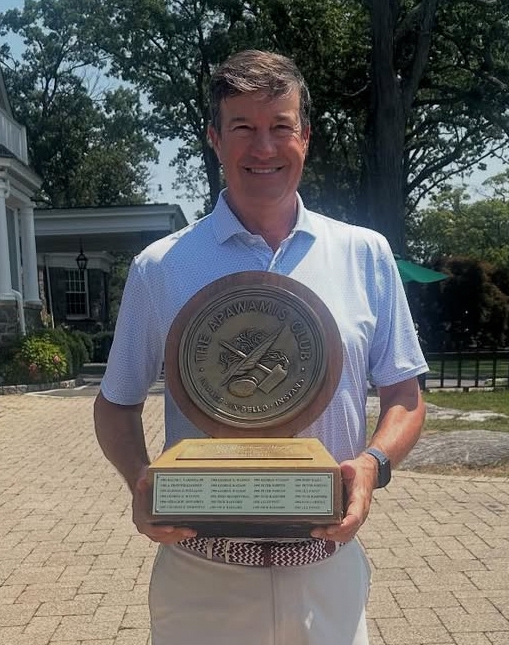
“My handicap dropped from a 4.0 to a 1.0. At 65, I’m playing the best golf of my life.”— Alan W. LeFevre

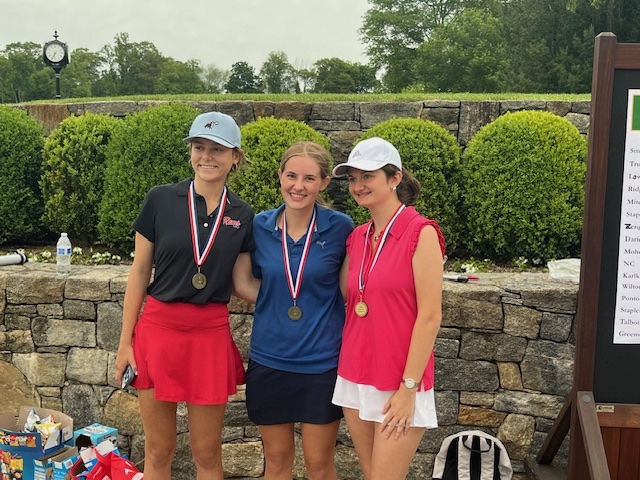
“Without the mental coaching I don’t know if I could have tied for 1st place in the County Championships.”— Ellery Talbot, FCIAC Co-Champion
Individual experiences and results vary.
The first conversation clarifies whether the best entry point is physical, mental, integrated, or a referral to another professional.
No. A golf professional owns swing technique. Stillpoint assesses and develops the golfer through movement, organization, progressive strength, capacity, routines, attention, and pressure skills.
Yes. Stillpoint is designed to complement technical instruction and keep swing decisions with the golfer’s golf professional.
Yes. Adults begin through Golf Performance Coaching. Junior golfers ages 9–22 can use the complete Youth Performance pathways for physical, mental, or integrated coaching.
In-person coaching serves Greenwich and Fairfield County, Connecticut. Mental-performance coaching is also available virtually nationwide.
No. Stillpoint provides strength and performance coaching, not physical therapy, medical care, psychotherapy, or mental-health treatment. Needs outside coaching scope are referred to the appropriate professional.
Book a short conversation with Eric to clarify the physical, mental, or integrated starting point.